LT Panel Manufacturer in Lahore: Buyer’s Guide
What LT panels do, the main types, what a well-built panel should include, how solar and generators change panel design, questions for manufacturers and how to maintain them.
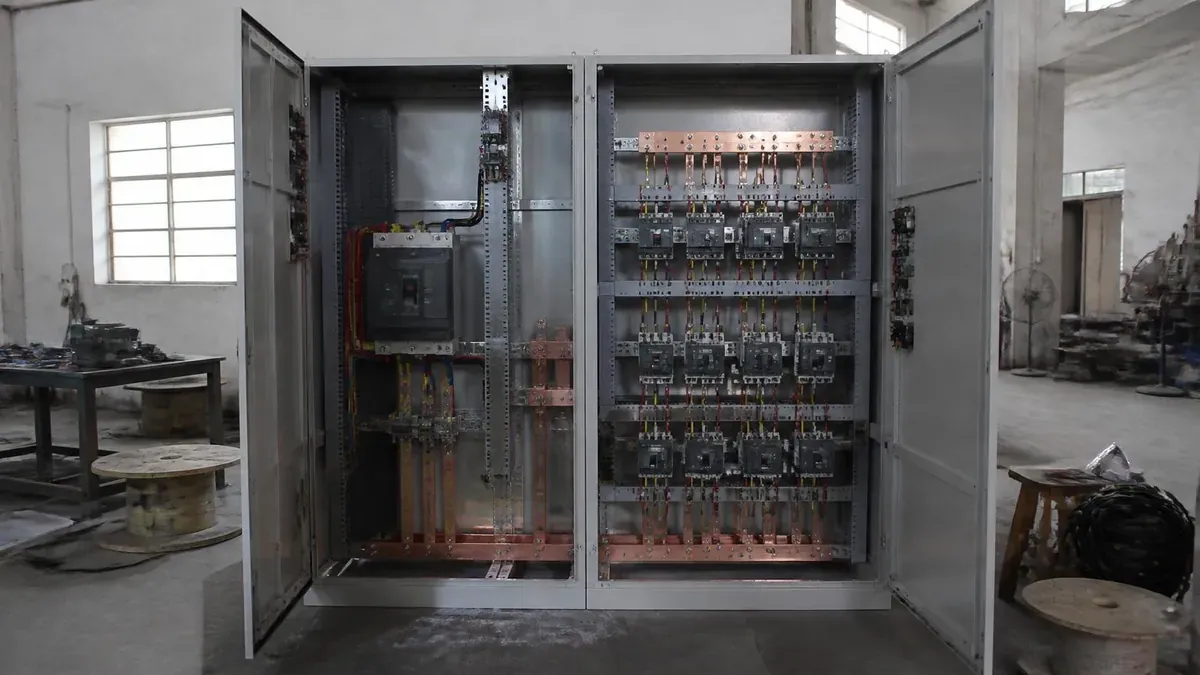
Every factory, commercial building and large solar installation depends on its low-tension (LT) panel: the switchgear assembly that receives power from the transformer and distributes it safely to loads. When a solar system is added, the LT panel also becomes the point where solar, grid and often a generator meet. If you are looking for an LT panel manufacturer in Lahore, this guide explains what an LT panel does, the main types, what a well-built panel should include, how solar changes panel design, and what to ask a manufacturer before you order.
What Does an LT Panel Do?
LT (low tension, or low voltage) panels operate at the distribution voltage used inside a building, typically 400V three-phase in Pakistan. An LT panel:
- Receives incoming power from the transformer, grid or generator.
- Protects the installation with circuit breakers against overloads and short circuits.
- Distributes power to sub-panels, motors, lighting and other loads.
- Allows safe isolation for maintenance.
- Provides metering so energy use can be monitored.
Common Types of LT Panels
| Panel type | Purpose | Typical use |
|---|---|---|
| Main LT panel / main distribution board | Receives power from the transformer and feeds the site | Factories, plazas, hospitals |
| Sub-distribution boards | Feed specific floors, sections or machines | Production halls, office floors |
| Changeover / ATS panels | Switch between grid and generator manually or automatically | Any site with backup generation |
| Power factor correction panels | Capacitor banks to improve power factor | Industrial sites with motor loads |
| Motor control panels | Starters, contactors and protection for motors | Pumps, compressors, machinery |
| Solar AC combiner / solar LT panels | Combine inverter outputs and connect solar to the site's distribution | Commercial and industrial solar |
What a Well-Built LT Panel Should Include
Enclosure
- Sheet steel of appropriate thickness, properly treated and powder coated against corrosion.
- Enough internal space for heat dissipation and safe maintenance.
- Ventilation or cooling suited to Punjab's summer temperatures.
- Lockable doors and appropriate ingress protection for the location.
Busbars and wiring
- Copper busbars sized for the rated current with suitable safety margin.
- Proper busbar supports rated for short-circuit forces.
- Neat, labelled wiring with correct cable lugs and termination.
- Separate, clearly marked earth bar.
Protection devices
- ACBs (air circuit breakers) for high-current incomers where appropriate.
- MCCBs (moulded case circuit breakers) for outgoing feeders.
- MCBs for smaller circuits.
- Surge protection devices, particularly where solar is connected.
- Earth leakage protection where required.
Metering and indication
- Multifunction energy meters showing voltage, current, power and power factor.
- Indicator lamps for phases and breaker status.
- Current transformers sized correctly for metering.
Breaker selection should be based on calculated load and fault levels, not guesswork. Ask for the design basis.
How Solar Changes LT Panel Design
Adding a commercial or industrial solar system changes how power flows in your building. Instead of only flowing from the transformer to the loads, power now also flows from the inverters into the distribution system, and sometimes back to the grid. That affects panel design in several ways:
- Inverter output combining: several inverter outputs must be combined through properly rated breakers before connecting to the main panel.
- Busbar capacity: the busbar must handle combined current from the grid and solar without overheating.
- Protection coordination: breakers must still trip correctly with two sources feeding faults.
- Generator interaction: when the generator runs, the panel and controls must prevent solar from reverse-feeding it.
- Metering: energy meters to separately track solar generation, grid import and export.
- Surge protection: solar arrays on large roofs are exposed to lightning-induced surges.
For more on industrial solar design, see our guide to the solar system for factories in Pakistan.
Questions to Ask an LT Panel Manufacturer in Lahore
- What load and fault level calculations is the design based on?
- What sheet thickness, coating and busbar material and size will you use?
- Which brands and ratings of ACBs, MCCBs and MCBs are included?
- Will you provide a single-line diagram and general arrangement drawing before fabrication?
- How will the panel integrate with solar inverters and the generator?
- What testing is done before dispatch?
- What warranty and after-sales support do you offer?
Maintaining LT Panels
LT panels are often installed and then forgotten until something trips or burns. Regular maintenance reduces that risk:
- Periodic tightening of busbar and cable connections, which loosen with thermal cycling.
- Thermal checks for hot spots, ideally with a thermal camera.
- Cleaning dust from inside the panel, particularly in industrial environments.
- Checking breaker operation and indicator lamps.
- Inspecting earthing connections.
For sites with solar, these checks fit naturally into a solar maintenance plan. See our solar annual maintenance contract guide.
MTS TRADERS: Switchgear and Solar Under One Roof
MTS TRADERS is a family-owned solar energy and switchgear company based on Mall Road, Lahore. Alongside more than 2,000 solar installations since 2017, we manufacture switchgear and LT panels. For our solar clients, that means the protection and distribution side is designed together with the solar system rather than added as an afterthought. We also supply breakers and solar accessories, and handle general order supply. Learn more on our services and about pages.
From Order to Commissioning
A typical LT panel project follows these steps:
- Site visit and load data collection.
- Load and fault level calculations, then a single-line diagram.
- General arrangement drawing showing panel layout and dimensions.
- Client approval of drawings and component brands.
- Fabrication, assembly and wiring.
- Factory testing before dispatch.
- Installation, termination and commissioning on site.
- Handover with drawings and test records.
Approving drawings before fabrication avoids costly changes later and ensures the panel fits the available space.
Choosing Components for Pakistani Conditions
High ambient temperatures in Punjab reduce the current a breaker or busbar can safely carry, so ratings should be selected with heat in mind. Dust calls for panels with suitable sealing and gland plates. Voltage fluctuations and frequent switching between grid and generator put stress on contactors and changeover equipment, so these should be rated for the duty. A manufacturer who works locally will design with these realities in mind.
Frequently Asked Questions
What is an LT panel?
A low-tension (low voltage) switchgear assembly that receives power from the transformer or generator and distributes it safely to loads, with protection and metering.
What is the difference between an LT panel and a distribution board?
Distribution boards are a type of LT panel, usually smaller and feeding specific areas. The main LT panel typically sits at the incoming supply and feeds sub-distribution boards.
Do I need a new LT panel when I add solar?
Not always, but for commercial and industrial solar the existing panel often needs a dedicated solar incomer, larger busbars, additional protection or metering. A site assessment will tell you.
Does MTS TRADERS make LT panels?
Yes. MTS TRADERS manufactures switchgear and LT panels in Lahore.
Request a Quote for LT Panels
Tell us about your load, your incoming supply and any solar or generator plans, and we will propose a panel to suit. Browse our products, or contact us or call 0300-4152648 for a free quote.