Lithium vs Tubular Battery for Solar in Pakistan
Tubular lead-acid and lithium LiFePO4 batteries compared on upfront price, usable capacity, cycle life, maintenance, space and safety, with a cost illustration and guidance on which to choose.
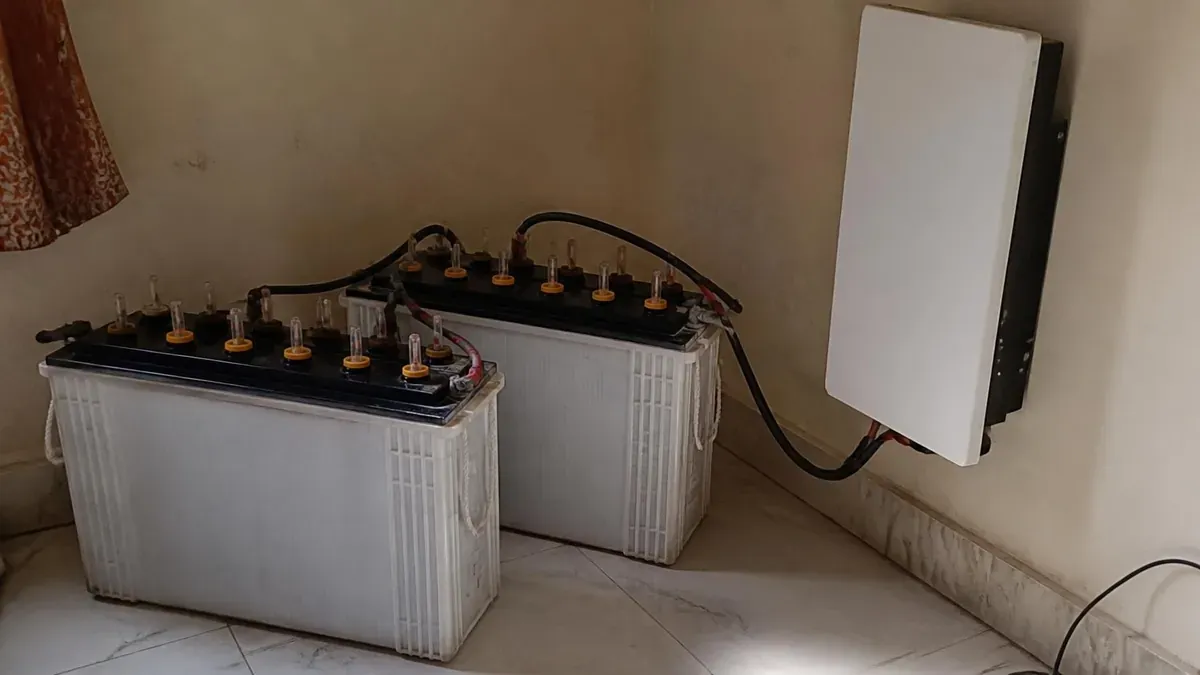
If you are adding backup to a solar system, sooner or later you will face the lithium vs tubular battery question. Tubular lead-acid batteries have powered UPS systems in Pakistani homes for years and still cost less upfront. Lithium iron phosphate (LiFePO4) batteries cost more to buy but last much longer and deliver more usable energy. This guide compares the two on price, usable capacity, lifespan, maintenance, space and safety, using approximate October 2026 market figures, and explains when each one still makes sense.
Lithium vs Tubular Battery: Side-by-Side Comparison
| Factor | Tubular lead-acid | Lithium (LiFePO4) |
|---|---|---|
| Approx. price per kWh (rated, Oct 2026) | ~Rs 20,000 to 30,000 | ~Rs 35,000 to 65,000 |
| Recommended usable depth of discharge | About 50% | About 90 to 95% |
| Typical rated cycle life | ~1,000 to 1,500 cycles | ~6,000 to 8,000 cycles |
| Typical service life in daily use | ~3 to 5 years | Often 8 years or more |
| Round-trip efficiency | ~80 to 85% | ~95% |
| Weight for ~5kWh usable | ~150 to 200kg | ~45 to 55kg |
| Maintenance | Distilled water top-ups, terminal cleaning, ventilation | Essentially maintenance-free |
| Charging speed | Slower; needs long absorption charge | Faster; accepts high charge current |
Figures are approximate ranges drawn from Pakistani market reports and battery comparisons published in 2026. Individual products vary.
Upfront Price vs Real Cost
A bank of four 200Ah tubular batteries (about 9.6kWh rated at 48V) was reported at roughly Rs 2 to 3 lakh in 2026, compared with roughly Rs 1.8 to 3.1 lakh for a single 5kWh lithium battery. On the shelf, tubular looks like better value. But because you should only use about half of a tubular battery's capacity to protect its life, that 9.6kWh bank gives roughly 4.8kWh of usable energy, similar to a 5kWh lithium battery used to 90%.
The bigger difference is lifespan. If a tubular bank needs replacing every three to five years in daily solar cycling while a lithium battery lasts much longer, the tubular option can end up costing more over ten years. A simple way to compare is cost per usable kWh delivered over the battery's life:
- Cost per lifetime kWh = battery price / (usable kWh x expected number of cycles)
Run that calculation with the actual prices and warranty terms you are quoted. In most daily-cycling solar systems, lithium comes out ahead.
When Tubular Still Makes Sense
- Very tight upfront budget, where any backup is better than none.
- Occasional use only, such as backup for rare outages rather than daily cycling.
- An existing UPS or inverter that only supports lead-acid charging profiles.
- A short time horizon, for example if you plan to move or upgrade within a few years.
When Lithium Is the Better Choice
- Daily solar cycling: storing midday surplus for the evening, which matters more under net billing.
- Regular load shedding of several hours.
- Limited space or rooftop/upper-floor installation, where weight matters.
- Homes where nobody wants to manage battery water levels.
- Higher loads such as inverter ACs, which need high discharge current.
Inverter Compatibility
Many modern hybrid inverters, including the GoodWe ES Uniq and Solis S6 L-PLUS ranges, support both lithium and lead-acid batteries, according to their published specifications. That lets some buyers start with tubular and switch later, but switching requires changing the inverter's battery settings and ideally setting up communication with the lithium battery's BMS. Some inverters, such as Huawei's battery-ready models, are designed only for their own high-voltage lithium batteries. Check before you buy. Our Huawei vs GoodWe vs Solis guide covers battery approaches by brand.
Space, Heat and Safety
Tubular
Lead-acid batteries release hydrogen during charging, so they need ventilation and should not be kept in sealed cupboards or near open flames. They contain acid, so spills can damage floors. Heavy banks need sturdy shelving.
Lithium
LiFePO4 is considered one of the more stable lithium chemistries, but it still needs a good BMS, correct installation, protection devices and a cool, dry location. Avoid installing in direct sun or in very hot rooms; heat shortens the life of every battery type, and Punjab summers are hard on batteries.
Real-World Backup Example
Consider a home with fans, lights, a refrigerator, a Wi-Fi router and a TV drawing around 800W during load shedding. As an illustration:
- About 4.8kWh usable (from either a 5kWh lithium battery or a 4 x 200Ah tubular bank) could theoretically run that 800W load for around five to six hours, before inverter losses.
- Adding a 1.5 ton inverter AC drawing around 1 to 1.5kW would cut that to roughly two to three hours.
Real results depend on actual loads, inverter efficiency and battery condition. The separate guide on our blog about sizing your solar battery backup goes into more detail.
Five-Year Cost Illustration
Here is a simplified illustration using the approximate October 2026 ranges above. It is not a quote, and real results depend on usage, heat and maintenance.
| Item | Tubular bank (4 x 200Ah) | 5kWh lithium |
|---|---|---|
| Approx. purchase price | ~Rs 2 to 3 lakh | ~Rs 1.8 to 3.1 lakh |
| Approx. usable energy per cycle | ~4.8kWh (at 50%) | ~4.6kWh (at 90%) |
| Likely replacements in 5 years of daily cycling | Possibly one | Usually none |
| Maintenance | Water top-ups, cleaning | Minimal |
| Energy lost in charging | Higher (~15 to 20%) | Lower (~5%) |
Once replacement and efficiency losses are counted, lithium's higher price is often recovered within the first battery life of a tubular bank. If your backup is only used occasionally, the picture is closer, and tubular can remain a sensible budget option.
Disposal and recycling
Old lead-acid batteries have resale and recycling value in Pakistan, which slightly offsets replacement cost. Make sure old batteries go to a proper recycler rather than informal breaking, which is hazardous.
Questions to Ask Before Buying Either Type
- What is the usable capacity at the recommended depth of discharge?
- What cycle life is the warranty based on, and at what depth of discharge?
- Is my inverter's charging profile correct for this battery?
- Where will the battery be installed, and how hot does that spot get in June?
- Who handles warranty claims, and how is a fault assessed?
Frequently Asked Questions
Is lithium better than tubular for solar?
For daily solar cycling, lithium is usually better: more usable capacity, much longer life, no maintenance and higher efficiency. Tubular can still suit tight budgets or occasional backup.
How long does a tubular battery last with solar?
In daily solar use, market comparisons in 2026 suggested roughly three to five years, depending on depth of discharge, heat and maintenance.
Can I replace tubular batteries with lithium on my existing inverter?
Often yes, if your inverter supports lithium and the voltage class matches. The inverter settings must be changed, and BMS communication is recommended.
What is the price difference between lithium and tubular?
Per rated kWh, lithium was roughly 1.5 to 2.5 times the price of tubular in October 2026. Per usable kWh over the battery's life, lithium is usually cheaper.
Talk to Us About Batteries
MTS TRADERS supplies lithium batteries and hybrid inverters and installs complete backup systems for homes and businesses across Lahore and Punjab. For current prices, see our lithium battery price in Pakistan guide, browse our products, or contact us or call 0300-4152648 for a free quote.